Bathroom Renovations: Plan Waterproofing and Ventilation Before Tile
A bathroom renovation should address existing moisture, the complete wet-area waterproofing system and effective exhaust ventilation before tile is installed. Attractive finishes are not a substitute for resolving leaks or planning the assembly behind them.
A bathroom renovation is a chance to improve more than the visible finishes. The shower assembly, plumbing details and exhaust system all influence how the room manages water and humidity.
Before selecting tile, review what is happening in the existing bathroom and what the new design requires. This is not a do-it-yourself waterproofing guide: wet-area details should follow the chosen system's instructions, applicable requirements and competent installation.
Begin with the existing moisture problem
Staining, soft surfaces, peeling paint, recurring musty odours and persistent condensation deserve attention before new finishes cover them. Water may come from a plumbing leak, a shower detail, condensation or another part of the building. The location of a stain does not always reveal its source.
Health Canada's moisture guidance stresses that mould can return unless the cause of the moisture problem is identified and resolved. Painting over a damp area is not a repair strategy.
Tell the contractor about previous leaks and repairs. Ask what can be inspected now, what may become visible during demolition and when specialist assessment may be needed.
Treat waterproofing as a complete assembly
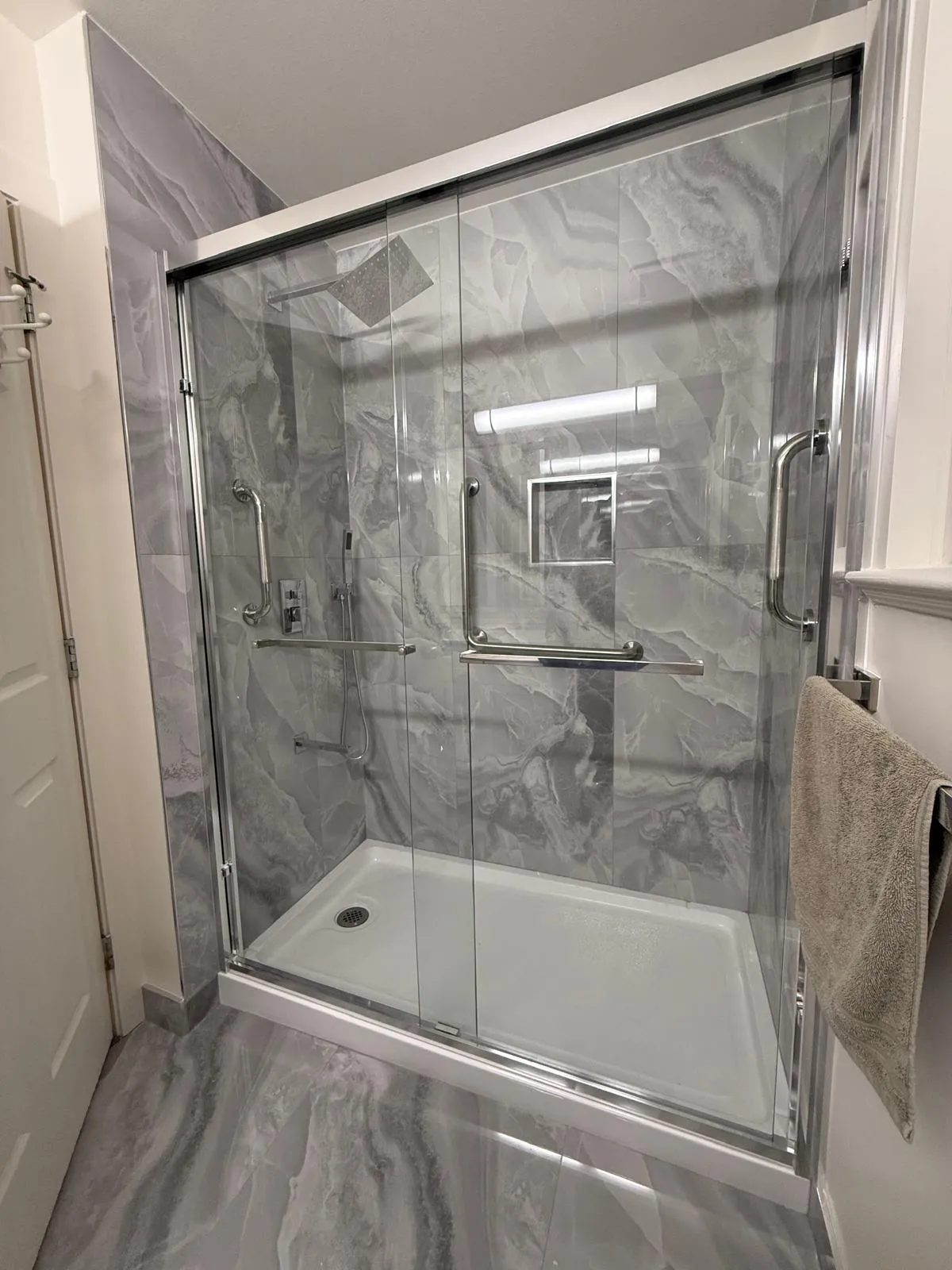
The visible tile is only one part of a wet area. The substrate, waterproofing approach, seams, corners, drain connection and penetrations need to work together.
Ask which system is proposed, whether its components are compatible and how installation will follow the manufacturer's requirements. Benches, niches, curbs and changes of plane need planned details rather than improvisation after tile has been selected.
Any checks or tests should follow the system instructions and applicable inspection requirements. Allow time for the required installation, drying and curing stages. Skipping a stage to keep an arbitrary completion date can undermine the work.
Consider the layout before choosing finishes
Decide whether the room needs a shower, tub or combination; where fixtures belong; and how doors, drawers and screens will move. Discuss access, cleaning and the needs of the people using the room.
Keeping fixture locations may be practical, but it does not eliminate the need to check plumbing and the condition of surrounding materials. Moving fixtures can expand the scope and may involve permits and shared-building coordination.
In strata homes, confirm water-shutoff procedures, approvals and responsibility for shared systems before scheduling. Municipal and strata permissions are not interchangeable.
Check where the fan actually exhausts
A fan that makes noise is not necessarily removing moisture effectively. Review its condition, duct route and outdoor termination, along with the airflow needed for the room.
Health Canada recommends using an exhaust fan when showering or bathing, maintaining adequate air movement and ensuring the exhaust goes outside rather than into the attic. A renovation is a useful time to investigate an ineffective arrangement while access is available.
Discuss convenient controls so the fan is actually used. A timer or other control may be appropriate, but the choice should suit the installation and user needs rather than replace proper ducting.
Make hidden-condition decisions explicit
Bathroom estimates should explain the assumptions about existing surfaces and services. Concealed deterioration may not be fully visible before demolition.
Agree that unexpected conditions will be documented and discussed before additional work proceeds. Ask who will assess a suspected structural, plumbing or substantial mould issue, and how any specialist work will be coordinated.
Do not assume new tile will solve every source of dampness. Repairs must address the cause, not only the visible damage.
Plan the handover as carefully as the installation
Before using the renovated wet area, confirm any required waiting periods. Keep product names, installation documents, care instructions and relevant warranty information.
Ask how to clean the selected finishes, what regular maintenance they need and which signs should prompt an inspection. Exhaust fans and seals still need attention after a renovation; no bathroom is maintenance-free.
Questions to bring to your estimate
Talk through a bathroom renovation
SturdyBee Property Solutions can discuss bathroom updates and the planning questions behind them. Share your goals and known concerns before settling on the finish package.
https://sturdybeesolutions.com/home-renovations/bathroom/
https://sturdybeesolutions.com/contact/
Official guidance
Health Canada: Guide to addressing moisture and mould indoors.
City of Vancouver: When you need a permit. Confirm rules for your municipality and actual work.
https://vancouver.ca/home-property-development/when-you-need-a-permit.aspx
This article is general renovation guidance, not medical advice or a waterproofing installation specification.
People Also Ask
Is bathroom tile enough to waterproof a shower?
Do not treat the visible tile and grout as the complete waterproofing system. The substrate, membrane or approved assembly, seams, drains and penetrations must be planned and installed according to the selected system's requirements.
Where should bathroom exhaust air go?
Health Canada recommends checking that bathroom exhaust fans move air adequately and vent to the outdoors, not into an attic. Existing ducting and applicable building requirements should be reviewed during the renovation.
Ready to get started?
SturdyBee Property Solutions serves 18 cities across Metro Vancouver & Fraser Valley. WCB covered, fully insured, Google Guaranteed.